

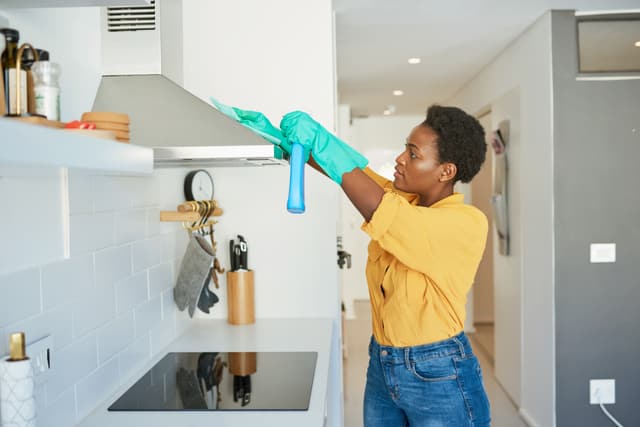
A stainless steel range hood pulls smoke, steam, and airborne grease away from your cooktop, and that grease has to land somewhere. Over time it settles on the exterior canopy as a sticky film and packs into the filters underneath, which dulls the finish and reduces how much air the exhaust fan can move. Regular cleaning keeps your ventilation working at full strength, protects the metal from permanent staining, and lowers the risk of grease buildup directly above a heat source.
The good news is that a clean, shiny hood takes only a few basic supplies and the right technique. Arizona Appliance & Home has put together this guide so you can care for your stainless steel range hood with confidence. Below, you’ll find the tools and cleaners that are safe for brushed metal, a step-by-step method for removing grease and polishing along the grain, how to clean baffle and mesh filters, the mistakes that damage stainless steel, and how often to clean based on the way you cook.
Upgrade Your Kitchen Ventilation
Browse our massive selection of premium range hoods to find the perfect fit for your cooking style.
Explore stainless steel range hoodKey Takeaways
- Proper Supplies: Select non-abrasive microfiber cloths and a specialized liquid degreaser to protect your metal finishes.
- Grain Polishing: Always wipe in the direction of the metal grain to prevent micro-scratches and cloudy streaks.
- Filter Maintenance: Soak dirty filters in hot water and baking soda to effortlessly dissolve trapped cooking grease.
What You Need to Clean Your Range Hood Safely
Gathering the right supplies is the most important step before you start wiping down your stainless steel range hood. Grabbing the wrong sponge can permanently ruin the finish of your appliance in seconds. You must avoid abrasive scouring pads like steel wool and harsh chemicals like bleach or ammonia, which will strip the protective clear coating right off the metal.

Instead, you want to rely on gentle tools and a powerful degreaser to do the heavy lifting. Understanding the direction of your stainless steel grain will also dictate which type of polishing cloth you use.
For the Exterior
- Microfiber cloths: Soft, lint-free towels that will not scratch or dull the metal surface.
- Mild dish soap: A grease-cutting liquid soap like Dawn mixed into a bowl of warm water.
- Stainless steel polish: A dedicated spray used to restore the factory shine after the grease is gone.
- Baking soda: A natural, gentle abrasive that helps break down sticky oil buildup safely.
- Soft bristle brush: An old toothbrush works perfectly to dislodge grime hiding between metal slats.
- Large basin: Your kitchen sink or a plastic tub big enough to fully submerge the dirty components.
For the Filters
How to Remove Grease and Polish the Hood
Tackling the exterior canopy of your stainless steel range hood requires a gentle touch and a little bit of patience. Wiping in the direction of the stainless steel grain is a rule you cannot ignore, as rubbing across the grain creates cloudy streaks and permanent micro-scratches. You can easily find the grain by looking closely at the metal to see which way the faint brush lines run.
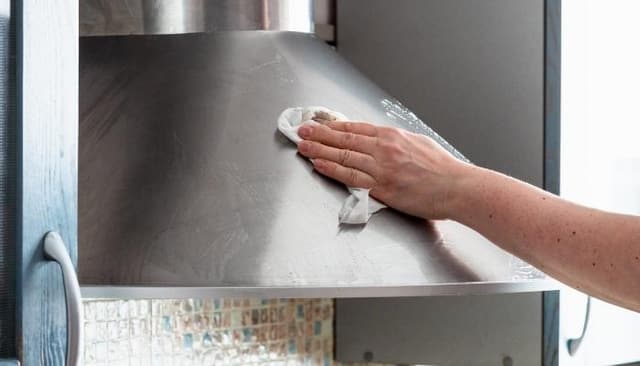
Step 1: Cut the sticky grease. Spray your degreaser or apply warm, soapy water to your microfiber cloth, rather than spraying the hood directly. Wipe down the entire surface along the grain to dissolve the yellow film, rotating the cloth frequently so you do not smear old oil back onto the metal.
Step 2: Buff and restore the shine. Once the surface is completely free of sticky residue, take a brand new, completely dry microfiber cloth. Apply a small amount of stainless steel polish to the cloth and buff the metal in long, even strokes along the grain until it gleams.
How to Clean Range Hood Filters Safely
The most critical functional part of maintaining your stainless steel range hood is addressing the dirty filters hiding underneath. When these internal components get clogged, your kitchen exhaust fan cannot pull smoke out of the room, leaving your fire alarms vulnerable to false triggers.
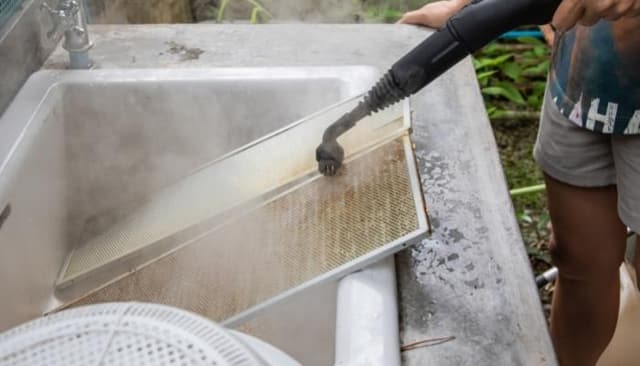
For heavily soiled components, the soaking method works best. Fill your sink with boiling water, a generous squirt of dish soap, and a quarter cup of baking soda. Submerge the dirty filters and let them sit for about twenty minutes, allowing the hot alkaline solution to completely dissolve the baked-on grease. After soaking, gently scrub them with a soft brush and rinse them thoroughly under hot water.
Many homeowners ask if they can simply put these parts in the dishwasher to save time. While some modern components are rated for the bottom rack, harsh dishwasher detergents can discolor cheap aluminum over time. Knowing exactly which type of filter you own helps dictate the best maintenance routine.
Baffle vs. Mesh Filters: Cleaning and Maintenance
| Feature | Baffle Filters | Mesh Filters |
|---|---|---|
| Filter Material | Typically made from heavy-duty stainless steel slats. | Usually constructed from layered aluminum or steel wire. |
| Grease Capture | Forces air to change direction quickly to trap heavy oils. | Uses multiple layers of fine metal to catch airborne particles. |
| Dishwasher Safety | Almost always safe for high-heat dishwasher cycles. | Often prone to discoloration from harsh dishwasher pods. |
| Cleaning Frequency | Requires a deep manual wash roughly once every month. | Needs a hot water soaking every two weeks to prevent severe clogging. |
| Total Lifespan | Can easily outlast the appliance with proper routine care. | Often requires replacement every few years as the delicate mesh degrades. |
Common Cleaning Mistakes That Damage Stainless Steel
Ruining a stainless steel range hood often happens entirely by accident. The most common error homeowners make is grabbing standard blue glass cleaner to wipe down their stove area. These common household sprays contain ammonia, which rapidly strips the protective coat off the metal and leaves permanent white streaks.
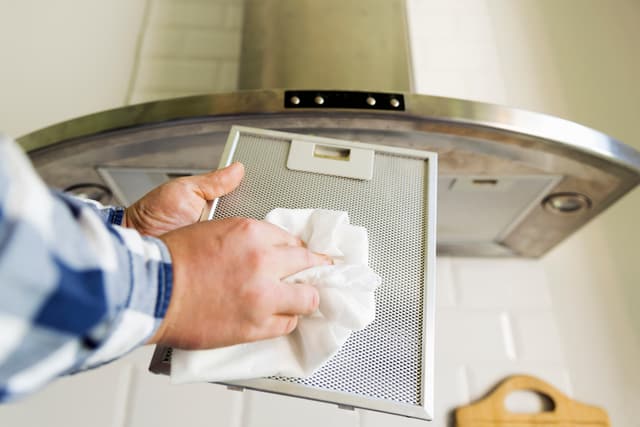
Using abrasive scrubbing pads is another fast way to destroy your kitchen investment. Even the rough green side of a standard dish sponge will leave dull, scratched patches on a brushed metal finish.
Waiting too long between washes is the biggest hidden mistake you can make. When cooking oil sits on warm metal for months, a process called polymerization occurs, turning the liquid grease into a rock-hard resin that is incredibly difficult to remove. Our installation technicians always advise wiping down the underside canopy right after high-heat searing, before the airborne oil cools and turns into a stubborn glue.
How Often Should You Clean Your Range Hood?

Setting a consistent maintenance schedule keeps your ventilation system running quietly and highly efficiently. Your exact timeline should reflect how often you cook and exactly what types of meals you prepare.
- Weekly Maintenance: Perform a quick wipedown of the exterior canopy using a damp microfiber cloth to remove surface dust and light cooking splatters.
- Monthly Deep Cleans: Remove the bottom filters and soak them in hot, soapy water if you boil pasta or bake meals a few times a week.
- Bi-Weekly Deep Cleans: Soak your filters every two weeks if you frequently fry bacon, sear steaks, or use a wok with heavy cooking oils.
Shop Premium Range Hoods at Arizona Appliance & Home
Maintaining your kitchen ventilation requires nothing more than the right gentle supplies, a good degreaser, and a regular filter cleaning schedule. Keeping that metal canopy shining protects your investment and keeps your home smelling fresh after every big meal.
When you are ready to upgrade your kitchen exhaust system, shop at Arizona Appliance & Home for the best selection in the area. Our expert showroom team provides personalized guidance, coordinates professional installation, and delivers the dedicated local customer service that big-box competitors simply cannot match.
Stainless Steel Range Hood FAQs
No, you should never use standard glass cleaners because they typically contain ammonia. This harsh chemical will quickly strip away the protective finish and leave permanent, cloudy streaks on the metal.
You can remove hardened grease by applying a heavy-duty, kitchen-safe degreaser and letting it sit for several minutes to break down the sticky bonds. Afterward, wipe the area firmly with a soft microfiber cloth following the direction of the metal grain.
Yes, solid metal baffle filters are generally safe to run through a standard, high-heat dishwasher cycle. However, cheap aluminum mesh versions often discolor and degrade when exposed to harsh dishwasher detergent pods.
The metal slats will completely clog with heavy cooking oil, preventing the exhaust fan from pulling smoke and odors out of your kitchen. This severe grease buildup also creates a significant fire hazard directly above your hot stove.
Diluted white vinegar is safe to use as a natural degreaser when mixed with warm tap water. However, you must rinse the area thoroughly with plain water afterward, as the high acidity can eventually dull the metal finish if left sitting.
You should replace standard aluminum mesh inserts every one to two years as the delicate layers begin to warp and fray. Solid metal baffle components rarely need replacing and will easily last the lifetime of the appliance with regular monthly washing.
Why Trust Arizona Appliance & Home?
At Arizona Appliance & Home, we're committed to providing the best selection and service to our customers. Whether you're a homeowner embarking on a remodel, a builder, or a designer, we have the expertise and resources to meet your needs.
With showrooms in Scottsdale, Tucson, and Phoenix, including a dedicated builder design center, we've proudly served the Arizona community since 1944. Visit one of our appliance showrooms to explore an unparalleled collection of refrigerators, dishwashers, cooking, laundry, and outdoor appliances.
Shop Range Hoods at Arizona Appliance & Home
Our team of experts are more than just appliance professionals – they're skilled, knowledgeable, and wonderful to work with. With years of experience under their belts, they understand how each appliance works and are passionate about helping customers make informed decisions. Whether you have questions about how to clean a range hood or need advice, our team is always happy to lend their expertise and provide personalized guidance. Contact us today to see how we can help you find the perfect appliance for your home.
Learn More: Choosing the Right Kitchen Hood Vent for Your Home Layout